
Table of Contents
Trust forms the foundation of every successful team. Without it, collaboration falters, morale drops, and productivity suffers. However, building trust as a new manager doesn’t have to take months or years.
Managers can establish trust quickly by adopting specific behaviors and communication practices. Moreover, these strategies work whether you’re leading a new team or rebuilding relationships with an existing one.
Why Trust Matters in Team Leadership
Teams with high trust levels perform better. Research shows they communicate more openly, solve problems faster, and support each other during challenges. In addition, employees feel more engaged and committed to their work.
When managers know how to establish trust, they create psychological safety. Therefore, team members feel comfortable sharing ideas, admitting mistakes, and taking calculated risks. This openness drives innovation and continuous improvement.
Furthermore, trust reduces workplace stress and turnover. Employees stay longer with managers they trust and respect.
Let’s Work Together!
Looking forward to exploring how Learnit can support your learning & development programs.
Start With Transparent Communication
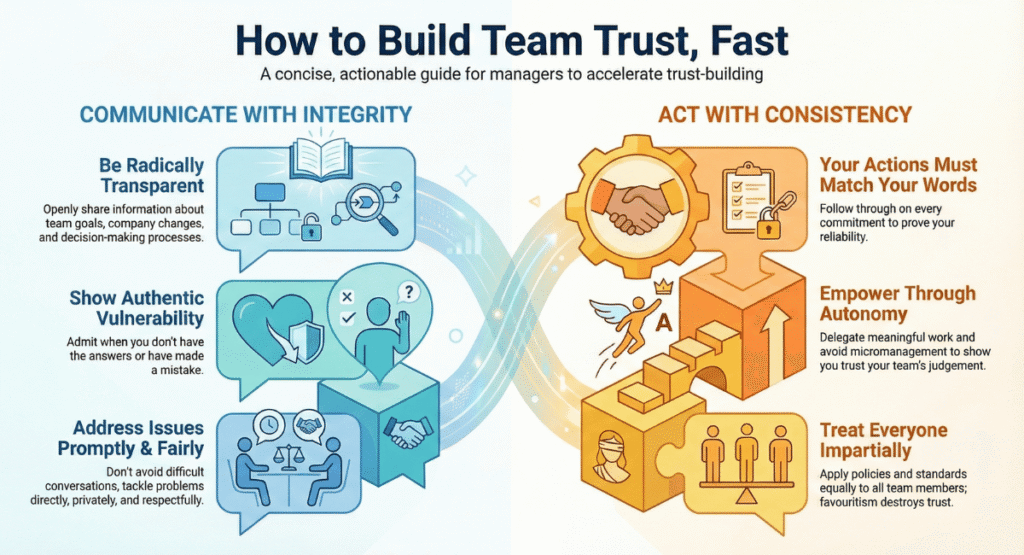
Transparency builds credibility instantly. Share information about team goals, company changes, and decision-making processes openly. However, balance transparency with discretion regarding sensitive matters.
Hold regular check-ins with team members. During these conversations, listen more than you speak. Moreover, ask questions that show genuine interest in their perspectives and challenges.
Admit when you don’t have all the answers. This honesty demonstrates authenticity and makes you more relatable. Subsequently, team members will feel more comfortable being honest with you.
Avoid sugarcoating difficult news. Instead, deliver tough messages clearly while showing empathy. Therefore, your team will respect your straightforwardness and trust your word.
Demonstrate Consistency in Actions
Your actions must align with your words. Consistency proves reliability and helps team members predict your behavior. In addition, it eliminates uncertainty and builds confidence in your leadership.
Follow through on commitments every time. If you promise to review a proposal by Friday, do it. Otherwise, your credibility erodes quickly.
Apply policies fairly across all team members. Favoritism destroys trust faster than almost anything else. Therefore, treat everyone with equal respect and hold everyone to the same standards.
Maintain consistent emotional responses. Teams struggle with leaders who are supportive one day and critical the next. However, this doesn’t mean suppressing emotions—it means managing them professionally.
Show Vulnerability and Authenticity
Perfect leaders don’t exist, and pretending otherwise damages trust. Share appropriate personal stories and challenges. Moreover, acknowledge your limitations and areas for growth.
Admitting mistakes demonstrates courage and sets a powerful example. When you own your errors, team members feel safer doing the same. Subsequently, this creates a learning culture rather than a blame culture.
Ask for feedback regularly and act on it. This shows you value others’ opinions and are committed to improvement. However, explain which feedback you can implement and why some suggestions might not be feasible.
Understanding how to establish trust through vulnerability requires balance. Share enough to seem human but maintain appropriate professional boundaries.
Let’s Work Together!
Looking forward to exploring how Learnit can support your learning & development programs.
Invest in Individual Relationships

Generic team-building activities have limited impact. Instead, invest time in understanding each person individually. Therefore, schedule one-on-one meetings to learn about their goals, concerns, and working preferences.
Remember personal details that matter to team members. Ask about their weekend plans, family milestones, or hobbies they’ve mentioned. Moreover, this shows you see them as whole people, not just employees.
Supporting individual growth demonstrates genuine investment in your team members’ futures. Help them develop skills, pursue interests, and advance their careers.
Tailor your management approach to each person’s needs. Some team members need frequent check-ins while others prefer autonomy. In addition, recognize that communication styles vary significantly across individuals.
Deliver on Promises and Commitments
Nothing erodes trust faster than broken promises. Before committing to anything, consider whether you can realistically deliver. However, if circumstances change, communicate immediately and explain why.
Create systems to track your commitments. Use calendars, task lists, or project management tools. Therefore, nothing falls through the cracks due to forgetfulness.
When you advocate for your team, follow through. If you promise to request additional resources or address a concern with leadership, do it. Moreover, update your team on progress even if results take time.
Recognize that small promises matter as much as large ones. Bringing coffee for a sick team member or remembering to share a relevant article builds trust incrementally.
Empower Through Delegation and Autonomy
Micromanagement signals distrust. Instead, delegate meaningful work and give team members space to execute. However, remain available for support and guidance when needed.
Clearly communicate expectations and desired outcomes. Then step back and let people work. Moreover, resist the urge to control every detail or impose your preferred methods.
When mistakes happen, use them as teaching moments rather than punishment opportunities. Therefore, your team learns that reasonable risks are acceptable and failure isn’t catastrophic.
Encourage decision-making at all levels. Support choices even when you might have decided differently. In addition, this builds confidence and demonstrates your trust in their judgment.
Provide Recognition and Support
Acknowledge contributions publicly and specifically. Generic praise feels hollow, so describe exactly what someone did well. Moreover, explain the positive impact their work created.
Celebrate team wins together. Share credit generously and avoid taking personal credit for collaborative achievements. Therefore, team members feel valued and motivated to continue performing well.
Support team members during difficult times, both professionally and personally. Show flexibility when life challenges arise. However, maintain fairness by offering similar accommodations to everyone.
Programs focused on organization growth emphasize that manager support directly impacts team performance and retention.
Let’s Work Together!
Looking forward to exploring how Learnit can support your learning & development programs.
Address Issues Promptly and Fairly
Avoiding difficult conversations undermines trust. When problems arise, address them quickly and directly. However, do so privately and with respect for the individual’s dignity.
Listen to all sides before drawing conclusions. Assumptions damage relationships and often prove incorrect. Moreover, involve team members in finding solutions when appropriate.
Apply consequences consistently when necessary. Teams lose faith in leaders who ignore poor performance or bad behavior. Therefore, hold everyone accountable to maintain credibility.
After resolving issues, move forward without holding grudges. This demonstrates emotional maturity and reinforces that mistakes don’t define people permanently.
Create Psychological Safety
Team members must feel safe expressing opinions, asking questions, and challenging ideas. Welcome dissenting views and thank people for sharing them. In addition, never punish someone for respectfully disagreeing with you.
Model the behavior you want to see. Admit uncertainty, ask basic questions, and acknowledge when others’ ideas are better than yours. Therefore, you give permission for others to do the same.
Intervene immediately if someone dismisses or ridicules a teammate’s contribution. Protect those who speak up and ensure all voices receive consideration. Moreover, this sends a clear message about acceptable team norms.
Understanding how to establish trust includes creating environments where people feel emotionally secure.
Invest in Continuous Learning
Commit to developing your leadership skills continuously. Attend training programs, read leadership books, and seek mentorship. However, don’t just consume information—apply what you learn consistently.
Share what you’re learning with your team. This demonstrates humility and encourages a growth mindset across the group. Moreover, it shows you’re invested in becoming a better leader for them.
Consider resources like a membership program that provides ongoing leadership development. Regular learning keeps your skills sharp and introduces fresh approaches to team management.
Ask your team what management approaches work best for them. Their feedback provides invaluable insights you won’t find in any book or course.
Maintain Boundaries and Professionalism
While authenticity is important, maintain appropriate professional boundaries. Share enough to be relatable but not so much that you burden your team. Therefore, save deeply personal issues for friends, family, or therapists.
Respect confidentiality always. If someone shares something in confidence, keep it private unless safety concerns require disclosure. In addition, don’t gossip about team members with each other.
Stay neutral in interpersonal conflicts between team members. Help them resolve issues without taking sides. Moreover, this maintains your credibility as a fair leader.
Balance friendliness with authority. You can be warm and approachable while still maintaining the ability to make tough decisions when necessary.
Let’s Work Together!
Looking forward to exploring how Learnit can support your learning & development programs.
Frequently Asked Questions
How long does it take for managers to establish trust with their teams?
Initial trust can develop within weeks through consistent positive behaviors. However, deep trust typically builds over three to six months of reliable leadership. The timeline varies based on past experiences, team dynamics, and the manager’s consistency in demonstrating trustworthy behaviors.
What should managers do if they’ve already lost their team’s trust?
Acknowledge the broken trust directly and take responsibility. Ask for specific feedback about what damaged the relationship. Then create an action plan with concrete changes and follow through consistently. Rebuilding trust takes longer than building it initially, but transparency and sustained effort can repair relationships.
Can managers be too trusting of their teams?
Yes, blind trust without accountability can be problematic. Effective managers balance trust with verification systems, clear expectations, and regular check-ins. Moreover, they adjust their approach based on individual team members’ track records and reliability patterns.
How do remote managers establish trust without face-to-face interaction?
Remote managers should over-communicate, maintain regular video calls, and create virtual opportunities for informal connection. Use technology intentionally to stay visible and accessible. In addition, be responsive to messages and follow through on commitments even more diligently than in-person managers.
What’s the biggest mistake managers make when trying to establish trust?
Inconsistency ranks as the most damaging mistake. Managers who say one thing but do another, or who treat team members differently based on favoritism, destroy trust rapidly. Therefore, alignment between words and actions is critical for building credibility.
Conclusion
Learning how to establish trust as a manager requires intentional effort and consistent behavior. It starts with transparent communication, follows through with reliable actions, and deepens through authentic relationships.
Trust isn’t built through grand gestures but through small, consistent choices made daily. Moreover, it requires vulnerability, fairness, and genuine investment in your team members’ success. The strategies outlined here provide a roadmap for developing trust quickly while laying the foundation for long-term leadership effectiveness.
Remember that trust is both fragile and valuable. Once established, protect it through continued consistency, honesty, and respect. Therefore, your investment in building trust will pay dividends in team performance, engagement, and loyalty for years to come.
Start implementing these practices today, and you’ll see measurable improvements in your team relationships within weeks.