

Table of Contents
Feedback shapes careers, builds skills, and drives organizational success. However, many managers struggle with delivering feedback effectively. They either avoid difficult conversations or deliver criticism in ways that demotivate rather than inspire.
Mastering the art of giving feedback as a manager transforms team performance. Moreover, it strengthens relationships, accelerates development, and creates a culture of continuous improvement. This comprehensive guide provides actionable steps to make your feedback conversations more effective and impactful.
Why Effective Feedback Matters?
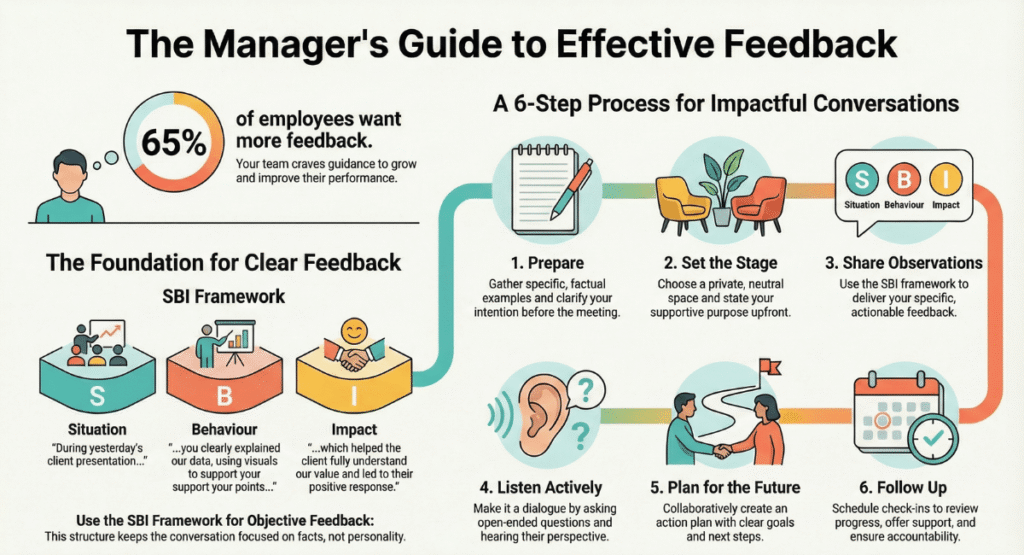
Employees crave feedback more than most managers realize. Studies show that 65% of employees want more feedback than they currently receive. Therefore, your feedback directly impacts engagement, retention, and performance.
Without regular feedback, team members operate blindly. They continue ineffective behaviors, miss growth opportunities, and feel disconnected from their development. In addition, unclear expectations create confusion and frustration across teams.
Effective feedback accelerates individual growth by providing the insights people need to improve. It closes performance gaps, reinforces positive behaviors, and aligns individual efforts with organizational goals.
Moreover, feedback creates accountability. When managers consistently provide clear input, team members understand expectations and take ownership of results.
Understanding Different Types of Feedback
Not all feedback serves the same purpose. Understanding the distinction helps you choose the right approach for each situation. However, all types require thoughtfulness and preparation.
Positive feedback recognizes and reinforces desired behaviors. It motivates employees, builds confidence, and clarifies what success looks like. Therefore, never underestimate the power of genuine recognition.
Constructive feedback addresses areas needing improvement. It identifies performance gaps and provides guidance for development. Moreover, it must be specific, actionable, and delivered with support.
Developmental feedback focuses on long-term growth rather than immediate performance issues. It helps employees expand capabilities and prepare for future opportunities. In addition, it shows investment in their career progression.
Mastering giving feedback as a manager means knowing when to use each type and how to balance them effectively.
Let’s Work Together!
Looking forward to exploring how Learnit can support your learning & development programs.
Step 1: Prepare Before the Conversation
Effective feedback starts long before the actual conversation. Gather specific examples, data, and observations to support your message. However, avoid collecting a lengthy list of grievances to dump all at once.
Identify the exact behavior or outcome you want to address. Vague feedback like “improve your attitude” provides no actionable direction. Instead, pinpoint specific actions or results that need attention.
Consider the timing carefully. Provide feedback as close to the event as possible while allowing emotions to settle. Moreover, choose a private, neutral location where the person feels comfortable.
Clarify your intention before starting. Ask yourself what you want the person to understand, feel, and do differently. Therefore, your message stays focused and purposeful.
Prepare for different reactions. Some people receive feedback defensively while others appreciate directness. However, plan how you’ll respond to resistance, emotions, or disagreement.
Step 2: Create the Right Environment
Physical and emotional environment significantly impacts feedback effectiveness. Schedule dedicated time rather than squeezing feedback into other meetings. In addition, ensure privacy to maintain dignity and confidentiality.
Start with a clear statement of purpose. Let the person know you’re providing feedback to support their success. Moreover, this framing reduces defensiveness and opens receptivity.
Eliminate distractions by turning off notifications and clearing your schedule. Give the conversation your full attention. Therefore, the person feels valued and heard throughout the discussion.
Use open body language and maintain appropriate eye contact. Sit at the same level rather than across a desk. However, respect personal space and cultural preferences regarding proximity.
Establish psychological safety by acknowledging that feedback conversations can feel uncomfortable. Remind the person that mistakes are learning opportunities. Moreover, emphasize your role in supporting their development.
Step 3: Use the SBI Framework
The Situation-Behavior-Impact framework provides structure for giving feedback as a manager. It keeps conversations objective, specific, and focused on behaviors rather than personality.
Situation: Describe when and where the behavior occurred. Provide context that helps the person recall the specific instance. However, keep this brief and factual.
Example: “During yesterday’s client presentation at 2 PM…”
Behavior: Describe the observable action or behavior objectively. Avoid judgments, assumptions, or interpretations. Moreover, stick to facts that anyone present would have witnessed.
Example: “…you interrupted the client three times while they were explaining their concerns…”
Impact: Explain the effect of the behavior on you, the team, or outcomes. This helps the person understand consequences they might not have recognized. Therefore, it creates motivation for change.
Example: “…which made the client visibly frustrated and caused us to miss important information about their needs.”
This framework works for both positive and constructive feedback. In addition, it removes ambiguity and provides clear examples to discuss.
Step 4: Make Feedback Specific and Actionable
Generic feedback wastes everyone’s time. Instead of “You need to communicate better,” specify exactly what needs improvement. Moreover, vague statements leave people confused about what to change.
Provide concrete examples of the behavior you observed. Use actual quotes, specific incidents, or measurable data. However, avoid overwhelming the person with too many examples at once.
Connect the feedback to clear standards or expectations. Explain why the behavior matters and what excellence looks like. Therefore, the person understands both the problem and the target.
Offer actionable suggestions for improvement. Don’t just identify problems—help solve them. In addition, invite the person to suggest their own solutions and strategies.
Focus on behaviors the person can actually control. Giving feedback as a manager about unchangeable traits or external factors creates frustration. Instead, concentrate on actions, decisions, and approaches within their influence.
Step 5: Listen Actively and Empathetically
Feedback should be a dialogue, not a monologue. After sharing your observations, pause and invite response. Moreover, genuinely listen to their perspective without interrupting or planning your rebuttal.
Ask open-ended questions to understand their viewpoint. Questions like “What’s your perspective on this?” or “What challenges were you facing?” encourage honest discussion. Therefore, you gain insights that might change your understanding.
Acknowledge emotions without dismissing them. If someone becomes upset, validate their feelings while maintaining the conversation. However, postpone the discussion if emotions become too intense for productive dialogue.
Watch for non-verbal cues that indicate confusion, disagreement, or emotional reactions. Address these signals directly and compassionately. In addition, adjust your approach based on what you observe.
Resist the urge to defend yourself or explain away their concerns. Instead, focus on understanding their experience fully. Moreover, this demonstrates respect and builds trust even during difficult conversations.
Step 6: Focus on Future Actions and Development
Effective feedback conversations always include forward-looking elements. After discussing the issue, shift toward solutions and growth. However, don’t rush this transition before fully exploring the situation.
Collaborate on creating an action plan with specific steps and timelines. Ask the person what support they need to succeed. Moreover, commit to providing resources, training, or guidance to facilitate improvement.
Set clear expectations and success metrics. Define what improved performance looks like and how you’ll measure progress. Therefore, both parties understand when the issue is resolved.
Schedule follow-up conversations to review progress and provide ongoing support. Regular check-ins demonstrate commitment and allow for course correction. In addition, they prevent small issues from becoming larger problems.
Programs focused on organization growth emphasize that consistent feedback loops accelerate team and company performance.
Step 7: Balance Positive and Constructive Feedback
The ratio of positive to constructive feedback significantly affects receptivity and motivation. Research suggests a ratio of 5:1 works best for most people. However, this doesn’t mean sandwiching criticism between hollow praise.
Recognize genuine achievements and positive behaviors regularly. Don’t save positive feedback for formal reviews. Moreover, specific recognition reinforces the behaviors you want repeated.
Avoid the “feedback sandwich” approach where you hide criticism between compliments. This technique often confuses the message and makes positive feedback seem insincere. Instead, give positive and constructive feedback separately when possible.
When addressing performance issues, acknowledge what’s working well too. This balanced approach maintains confidence while addressing needed improvements. Therefore, people feel motivated rather than defeated.
Remember that giving feedback as a manager includes celebrating progress and wins, not just correcting mistakes.
Step 8: Adapt Your Approach to Different Individuals
One-size-fits-all feedback rarely works. Some people prefer direct, concise input while others need more context and discussion. However, everyone deserves clear, honest communication regardless of style preferences.
Consider personality types and communication preferences. Introverts might prefer written feedback before verbal discussions. Extroverts often process better through conversation. Moreover, cultural backgrounds influence how people interpret directness and criticism.
Adjust frequency based on experience levels. New employees need more frequent feedback than seasoned professionals. However, even experienced team members benefit from regular input and recognition.
Account for past experiences with feedback. Someone who’s received harsh criticism before might be more sensitive. Therefore, build psychological safety gradually while maintaining honesty.
Investing in a membership program for leadership development can help you master these adaptability skills through ongoing training and resources.
Step 9: Address Defensiveness Constructively
Defensiveness is a natural response to criticism. When it occurs, pause and address it directly rather than pushing forward. Moreover, acknowledge that receiving feedback can feel uncomfortable.
Ask questions to understand the defensive reaction. Sometimes defensiveness signals a legitimate perspective you haven’t considered. However, sometimes it reflects discomfort with accountability.
Reframe the conversation around shared goals. Remind the person that you’re working together toward their success. Therefore, you shift from adversarial to collaborative dynamic.
If someone becomes argumentative, stay calm and redirect to specific examples. Avoid getting pulled into debates about intentions or feelings. Instead, keep the focus on observable behaviors and impacts.
Sometimes defensiveness indicates that the person needs time to process. Offer to continue the conversation later after they’ve reflected. In addition, provide written summary of key points for review.
Step 10: Document Important Feedback Conversations
Documentation protects both you and your team members. Keep brief notes about significant feedback discussions, especially performance-related ones. However, focus on facts, not opinions or emotions.
Record the date, topic, specific behaviors discussed, and agreed-upon action steps. Include timelines for improvement and follow-up dates. Moreover, this creates accountability and tracks progress over time.
Share documentation with the employee when appropriate. This ensures alignment and provides reference material for their development. Therefore, misunderstandings decrease significantly.
Use documentation to inform performance reviews, promotion decisions, and development plans. However, maintain confidentiality and store records securely according to company policies.
Let’s Work Together!
Looking forward to exploring how Learnit can support your learning & development programs.
Common Mistakes to Avoid

Several pitfalls undermine feedback effectiveness. Being aware of these helps you deliver better input consistently. However, even experienced managers occasionally fall into these traps.
Waiting too long: Delayed feedback loses impact and allows problems to worsen. Address issues promptly while maintaining composure. Moreover, immediate feedback connects more clearly to specific behaviors.
Being too vague: General statements provide no actionable direction. Always include specific examples and clear expectations. Therefore, people know exactly what to change.
Making it personal: Feedback should address behaviors and results, never character or personality. Avoid statements like “You’re lazy” or “You don’t care.” Instead, describe observable actions and their impacts.
Dominating the conversation: Feedback requires dialogue, not lecture. Ask questions, listen actively, and collaborate on solutions. In addition, this approach increases buy-in and commitment.
Ignoring positive feedback: Many managers only provide feedback when problems arise. This creates anxiety around feedback conversations. However, regular positive input makes constructive feedback easier to receive.
Building a Feedback Culture
Individual feedback conversations matter, but organizational culture amplifies their impact. Create systems and norms that normalize feedback at all levels. Moreover, model the behaviors you expect from your team.
Encourage peer-to-peer feedback, not just top-down communication. Team members often have valuable insights for each other. Therefore, create safe channels for horizontal feedback exchange.
Normalize asking for feedback as a manager. Regularly request input on your leadership and act on suggestions. However, distinguish between gathering input and seeking approval for every decision.
Celebrate growth and improvement publicly when appropriate. This reinforces that feedback leads to positive outcomes. In addition, it motivates others to embrace developmental conversations.
Train your entire team on giving feedback as a manager and as colleagues. These skills benefit everyone and strengthen team dynamics significantly.
Let’s Work Together!
Looking forward to exploring how Learnit can support your learning & development programs.
Frequently Asked Questions:
How often should managers give feedback to their team members?
Provide informal feedback continuously multiple times per week for most team members. Schedule formal feedback conversations quarterly at minimum. However, frequency should increase for new employees, those struggling with performance, or during periods of change. Don’t wait for annual reviews to address issues or recognize achievements.
What should I do if an employee disagrees with my feedback?
Listen to their perspective fully without interruption. Ask questions to understand their viewpoint. Sometimes disagreement reveals valid information you hadn’t considered. However, if you still believe the feedback is accurate after hearing them out, explain your reasoning clearly while acknowledging their perspective. Focus on observable facts and agree to monitor the situation going forward.
How can I give negative feedback without demotivating employees?
Frame constructive feedback as investment in their growth rather than criticism. Be specific about behaviors, not personality. Express confidence in their ability to improve. Moreover, provide support and resources to help them succeed. End conversations with forward-looking action plans that emphasize development opportunities. Balance constructive feedback with genuine recognition of strengths.
Should feedback always be given in person?
In-person feedback is ideal for sensitive or complex issues because it allows for nuanced communication and immediate dialogue. However, brief positive feedback works well via email or messaging. Video calls work for remote teams. In addition, written feedback can supplement verbal conversations by providing reference material. Match the medium to the message’s importance and complexity.
How do I handle feedback conversations with someone who reports to me but has more expertise?
Focus feedback on outcomes, behaviors, and team dynamics rather than technical details you may not fully understand. Acknowledge their expertise while addressing the specific issue. Moreover, ask questions to understand their approach and reasoning. Frame feedback around impact on team, clients, or goals. Therefore, you provide valuable perspective even without deep technical knowledge.
What’s the best way to prepare for giving feedback as a manager for the first time?
Practice your key points beforehand, possibly with a peer or mentor. Write down specific examples and desired outcomes. Anticipate possible reactions and prepare responses. However, stay flexible—don’t script the entire conversation. Start with less sensitive feedback to build confidence. In addition, review frameworks like SBI to provide structure for your message.
Conclusion
Giving feedback as a manager ranks among your most important leadership responsibilities. It shapes team performance, drives individual development, and creates organizational culture. Moreover, effective feedback strengthens relationships rather than damaging them when delivered skillfully.
The step-by-step approach outlined here provides a practical framework for any feedback situation. Start by preparing thoroughly, create the right environment, use structured frameworks like SBI, and always focus on actionable improvements. However, remember that feedback is a dialogue requiring active listening and genuine empathy.
Balance positive recognition with constructive input, adapt your approach to individual needs, and document important conversations for accountability. Therefore, you build a comprehensive feedback practice that serves your team well.
Most importantly, commit to consistency. Regular feedback conversations become easier with practice and create exponentially better results than annual reviews alone. In addition, they demonstrate your investment in your team’s success and development.
Start implementing these strategies today, and you’ll see measurable improvements in team performance, engagement, and trust. Giving feedback as a manager is a skill that improves with practice, so begin with your next conversation and refine your approach continuously.