Table of Contents
Leadership development programs fail more often than they succeed. Organizations invest millions in training that produces minimal behavior change, leaving both participants and executives frustrated with wasted resources.
The problem isn’t lack of effort, it’s lack of effective strategy. Companies treat leadership development as a checklist item rather than a systematic capability-building process aligned with business priorities.
Understanding best practices in leadership development separates programs that transform organizational capability from those that merely check boxes. These proven strategies ensure development investments generate measurable returns through stronger leaders and better business results.
This guide outlines ten evidence-based practices that make leadership development actually work, regardless of organization size or industry.
1. Align Development with Business Strategy
The most effective leadership development directly supports organizational objectives. Generic leadership training disconnected from business realities wastes everyone’s time.
Start by identifying critical business challenges over the next three to five years. Does your strategy require rapid growth, digital transformation, market expansion, or operational excellence? Each priority demands different leadership capabilities.
Design competency frameworks that explicitly connect leadership behaviors to business outcomes. When leaders understand how their development advances organizational success, engagement and application increase dramatically.
Moreover, involve senior executives in defining required capabilities. Their strategic perspective ensures development builds skills the organization actually needs rather than what’s currently popular in leadership literature.
Review alignment annually as strategy evolves. What experienced managers wish they knew earlier often includes the importance of continuous learning that adapts to changing business contexts.
2. Create Progressive Development Pathways
Leadership isn’t a single destination, it’s a journey through increasingly complex responsibilities. Development must match where people are and prepare them for what’s next.
Design distinct programs for different leadership stages: first-time managers, experienced managers leading teams, senior leaders managing managers, and executives leading organizations. Each stage requires fundamentally different capabilities.
Build clear progression between levels. Completing one program should prepare participants for the next, creating visible career pathways that motivate high-potential talent.
In addition, avoid the common mistake of giving everyone the same content. A new supervisor needs fundamentally different development than a vice president. One-size-fits-all programming fails both groups.
Therefore, establish entry criteria that ensure participants have mastered prerequisite capabilities before advancing. Promoting someone into advanced programming before they’re ready sets them up for failure and frustrates cohort members.
Let’s Work Together!
Looking forward to exploring how Learnit can support your learning & development programs.
3. Emphasize Experiential Learning Over Classroom Theory
Adults learn leadership through practice, not lectures. The 70-20-10 model suggests 70% of development happens through challenging assignments, 20% through relationships, and only 10% through formal training.
Structure programs around action learning projects that tackle real organizational challenges. Participants apply concepts immediately to problems that matter, making learning relevant and demonstrating tangible value.
Include stretch assignments that push people beyond current comfort zones. Growth happens at the edge of capability, not while repeating familiar tasks.
Moreover, incorporate simulations and role-plays for practicing difficult conversations, crisis management, and strategic decision-making. These safe environments allow experimentation and failure without real-world consequences.
Rotate high-potential leaders through different functions or geographies. Exposure to diverse challenges and perspectives accelerates development faster than staying in familiar environments.
However, don’t eliminate classroom instruction entirely. Foundational concepts provide frameworks that make experience meaningful rather than just random trial and error.
4. Integrate Coaching and Mentoring
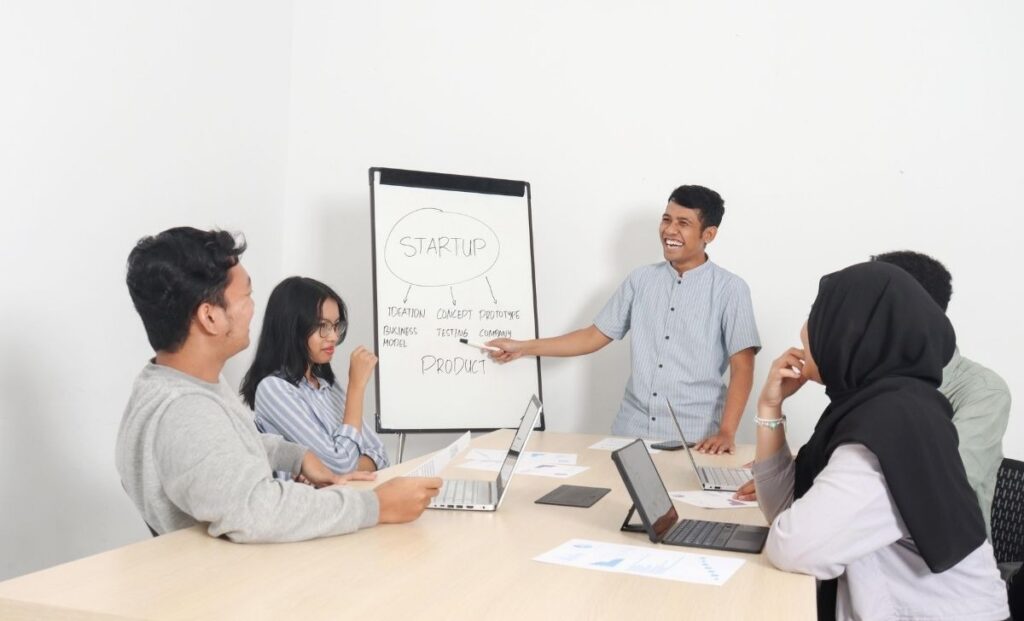
Personalized development addresses individual strengths, gaps, and goals in ways group programs can’t match.
Provide executive coaching for senior leaders and high-potential managers. Skilled coaches help leaders navigate complex challenges, develop self-awareness, and accelerate behavior change through structured reflection and accountability.
Establish formal mentoring relationships that pair emerging leaders with experienced executives. Mentors provide organizational wisdom, career guidance, and advocacy that dramatically impact advancement opportunities.
In addition, train managers to coach their direct reports effectively. Giving feedback as a manager represents one coaching skill, but comprehensive coaching capability includes asking powerful questions and developing others systematically.
Create peer coaching circles where leaders at similar levels support each other’s development. These relationships often outlast formal programs and provide ongoing learning communities.
Therefore, measure coaching quality and impact regularly. Not all coaches or mentors are equally effective. Regular feedback ensures relationships deliver value worth the time investment.
5. Make Leadership Development Continuous, Not Episodic
Single workshops or programs don’t create lasting behavior change. Leadership capability builds through sustained effort over months and years.
Design development as ongoing journeys rather than one-time events. Space learning over extended periods with application requirements between sessions that embed new behaviors through practice.
Establish spaced repetition of critical concepts. Revisiting key principles multiple times through different contexts strengthens retention and application significantly more than single exposure.
Moreover, provide microlearning resources accessible when leaders need them. Short videos, articles, or tools available on-demand support application between formal development sessions.
Create continuous learning cultures where development is expected and supported rather than treated as optional or reserved for high-potentials only.
In addition, build development into annual goal-setting and performance reviews. When leadership growth is explicitly evaluated and rewarded, it becomes prioritized rather than deprioritized when work gets busy.
Let’s Work Together!
Looking forward to exploring how Learnit can support your learning & development programs.
6. Leverage Cohort-Based Learning Models
Learning alongside peers facing similar challenges creates powerful development accelerators that individual programs can’t replicate.
Structure programs around cohorts that progress through development together. These groups provide accountability, diverse perspectives, and psychological safety for taking risks and admitting vulnerabilities.
Facilitate peer learning through structured discussions, case studies, and collaborative problem-solving. Often, participants learn as much from each other as from formal instruction.
Therefore, design cohorts intentionally regarding size and composition. Groups of 20-30 provide enough diversity while remaining manageable. Mix functions, perspectives, and backgrounds to maximize learning from differences.
Create cohort projects that require collaboration on complex challenges. Working together builds relationships while developing teamwork and influence skills critical for organizational leadership.
However, maintain cohort connections beyond formal programming. Alumni networks extend learning communities and provide ongoing support throughout careers.
7. Ensure Senior Leadership Visibility and Participation
Executive involvement signals that leadership development matters and isn’t just an HR initiative disconnected from real business.
Have senior leaders actively participate in programs, teaching sessions, sharing experiences, or providing executive perspectives on strategic challenges. Their presence elevates perceived importance dramatically.
Invite executives to hear action learning project presentations. This provides participants with exposure while demonstrating that development work receives genuine attention from organizational decision-makers.
In addition, ask senior leaders to sponsor individual participants as mentors or advisors. These relationships provide career advocacy while helping executives identify and develop emerging talent.
Create executive steering committees that guide development strategy. When senior leaders shape programming rather than just endorsing it, alignment with business priorities improves significantly.
Moreover, hold executives accountable for developing their direct reports. Leadership development shouldn’t be delegated entirely to L&D departments, people leaders at all levels must own team development.
8. Measure Impact Beyond Satisfaction Surveys
Demonstrating return on development investment requires measuring outcomes that actually matter to organizational success.
Assess behavior change through 360-degree feedback before and after programs. Did participants’ leadership effectiveness improve according to colleagues who work with them daily?
Track promotion rates and career velocity of program participants compared to non-participants. Effective development should accelerate readiness for increased responsibility.
Therefore, monitor team performance metrics for leaders who complete development. Do their teams show improved engagement, productivity, retention, or innovation after their manager develops new capabilities?
Calculate business impact of action learning projects. Many programs generate multiples of their cost through solutions participants implement during development.
In addition, measure organizational leadership bench strength over time. Is the pipeline of promotion-ready leaders growing? Are critical positions increasingly filled internally rather than through external hiring?
9. Customize Development to Individual Needs
While cohort programs provide efficiency, effective development recognizes that leaders have different strengths, gaps, and learning preferences.
Use assessment tools to identify individual development priorities. 360-degree feedback, personality assessments, and leadership competency evaluations reveal personalized growth areas.
Create individual development plans that connect personal goals with organizational needs. When leaders see how their growth advances both career aspirations and business objectives, motivation increases.
Moreover, offer choice in development methods. Some people learn best through reading, others through discussion, and still others through hands-on practice. Flexible approaches accommodate diverse learning styles.
Provide differentiated pathways for leaders with different career trajectories. Someone aspiring to functional expertise needs different development than someone pursuing general management roles.
However, balance customization with cohort benefits. Too much individualization eliminates peer learning advantages. The sweet spot combines common core experiences with personalized elements.
10. Create Cultures That Support Continued Application
The best development programs fail if organizational culture doesn’t reinforce new behaviors when participants return to their roles.
Train managers to support their direct reports’ development actively. When someone returns from a program, their manager should discuss application opportunities and provide practice coaching.
Remove barriers that prevent leaders from applying new skills. If development emphasizes delegation but workload makes it impossible, behavioral change won’t happen.
In addition, celebrate visible examples of leaders applying development. Recognition reinforces that using new capabilities is valued and expected, not optional.
Build management training into talent management processes. When development connects explicitly to promotions, high-potential identification, and succession planning, it receives appropriate priority.
Therefore, provide ongoing resources through membership communities that extend learning beyond formal programs. Continuous access to content, tools, and peer networks sustains development momentum.
Let’s Work Together!
Looking forward to exploring how Learnit can support your learning & development programs.
Integrating Technology Strategically
Modern leadership development leverages technology to enhance effectiveness without losing the human connection essential to leadership growth.
Use learning management systems to deliver foundational content flexibly before group sessions. This flipped classroom approach maximizes valuable in-person time for application, discussion, and practice.
Incorporate AI-powered tools that provide on-demand coaching, feedback, and resources between formal sessions. These technologies supplement rather than replace human coaching relationships.
Moreover, leverage virtual reality for practicing difficult leadership scenarios, crisis management, tough conversations, or strategic presentations, in risk-free environments.
Create social learning platforms where participants share challenges, solutions, and resources beyond scheduled programming. These communities extend learning throughout the year rather than limiting it to program dates.
However, don’t let technology replace human interaction. Leadership fundamentally involves human relationships, which require face-to-face connection to develop authentically.
Avoiding Common Development Pitfalls
Even well-intentioned programs fail when they fall into predictable traps. Awareness helps you design around these common mistakes.
Don’t treat development as reward for past performance. Select participants based on future potential and organizational need, not tenure or loyalty.
Avoid generic content that could apply anywhere. Ground everything in your specific organizational culture, challenges, and strategic context to maintain relevance and engagement.
Therefore, don’t launch without executive commitment. Visible senior leadership support isn’t optional, it’s essential for credibility and sustained funding.
Resist the temptation to measure only satisfaction scores. Participants enjoying programs doesn’t mean they’re learning or changing behavior. Measure outcomes that matter to business success.
In addition, don’t design programs once and never update them. Organizations evolve, strategies shift, and leadership challenges change. Development must adapt accordingly through regular review and refinement.
Frequently Asked Questions
How much should organizations invest in leadership development?
Best-practice organizations invest 3-5% of leadership payroll in development annually. This typically translates to 40-50 hours per leader per year across formal programs, coaching, and self-directed learning. The investment pays for itself through improved retention, faster promotion readiness, and better team performance.
Should we develop all leaders or focus on high-potentials?
Both are necessary. Core leadership competencies should be available to all people managers to ensure baseline capability. Additionally, invest in accelerated development for high-potential leaders who’ll fill critical future roles. The ratio is typically 60-70% on broad-based development and 30-40% on high-potential acceleration.
How do we get senior leaders to participate in development programs?
Make the business case explicit, show how leadership capability gaps constrain strategic objectives. Involve executives in designing programs so they have ownership. Start small with senior leaders who are development champions, then leverage their advocacy to engage others. Make participation convenient and demonstrate tangible value quickly.
What if leaders don’t apply what they learn?
This signals either selection issues, content relevance problems, or lack of organizational support. Ensure you’re selecting people ready to learn. Make content directly applicable to participants’ real challenges. Most importantly, create accountability systems and manager support that reinforce application after programs end.
How long does it take to see results from leadership development?
Individual behavior changes typically appear within 3-6 months of focused development. Team-level impact becomes measurable at 6-12 months. Organization-wide capability shifts require 2-3 years of sustained effort as development scales across leadership populations. Quick wins demonstrate value while longer-term investments build systemic capability.
Conclusion
Implementing best practices in leadership development transforms well-intentioned programs into strategic capabilities that drive organizational success.
The ten strategies outlined here, strategic alignment, progressive pathways, experiential learning, coaching integration, continuous development, cohort models, executive involvement, impact measurement, customization, and cultural support, work together to create comprehensive development systems.
Don’t try implementing everything simultaneously. Start with practices that address your most critical gaps. Build gradually as you demonstrate value and gain organizational support.
Remember that leadership development is investment, not expense. Organizations with strong leadership consistently outperform competitors across virtually every business metric. The capability you build today determines your competitive position tomorrow.
Focus relentlessly on application and behavior change, not just knowledge acquisition. Leadership development succeeds only when participants actually lead differently, and better, as a result.
The practices outlined here have been proven across thousands of organizations and millions of leaders. They work when implemented with commitment, measured rigorously, and refined continuously based on results. Your investment in leadership development, guided by these best practices, will pay dividends for years to come.